Turbine joins Multimodal AI-ready data collaboration to train Virtual Assays in immune biology
Read more

Publications

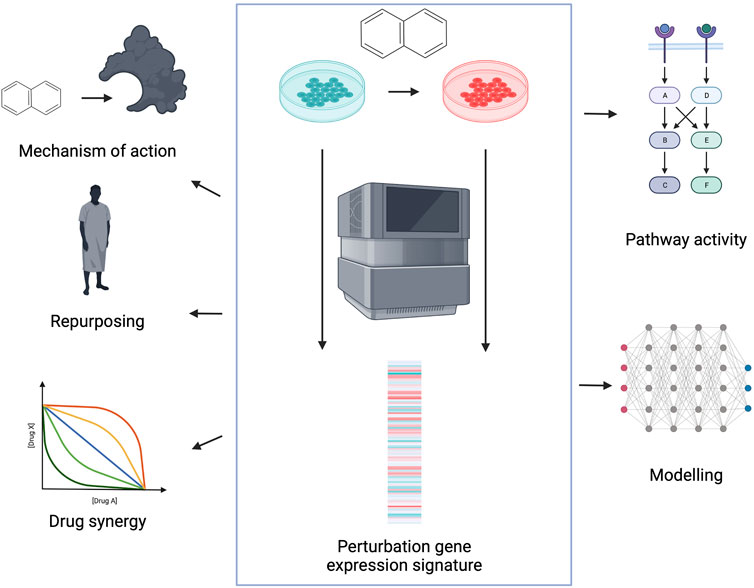
Application of perturbation gene expression profiles in drug discovery – From mechanism of action to quantitative modelling 
Publication

Bence Szalai, Daniel V. Veres

High dimensional characterization of drug targets, compound effects and disease phenotypes are crucial for increased efficiency of drug discovery. High-throughput gene expression measurements are one of the most frequently used data acquisition methods for such a systems level analysis of biological phenotypes. RNA sequencing allows genome wide quantification of transcript abundances, recently… read more
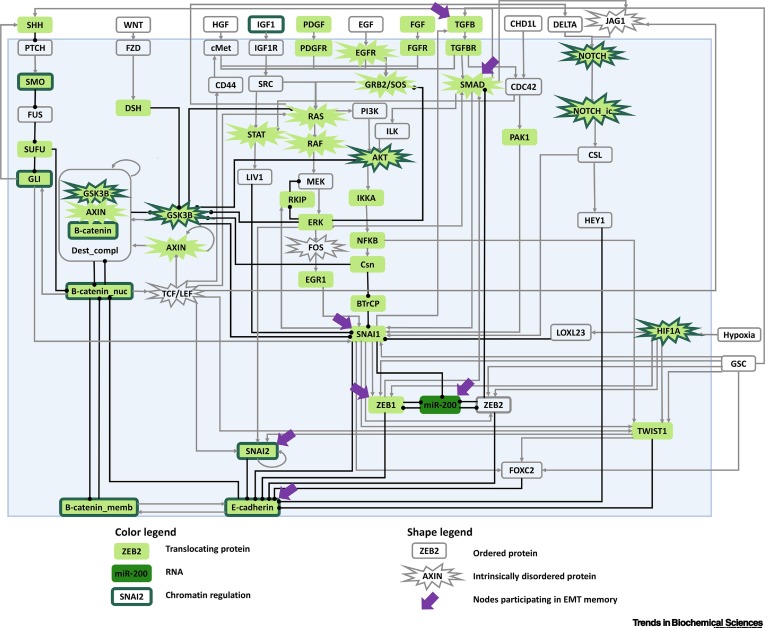
Learning of Signaling Networks: Molecular Mechanisms 
Publication

Peter Csermely, Nina Kunsic, Peter Mendik, Mark Kerestely, Teodora Farago, Daniel V. Veres, Peter Tompa

Molecular processes of neuronal learning have been well described. However, learning mechanisms of non-neuronal cells are not yet fully understood at the molecular level. Here, we discuss molecular mechanisms of cellular learning, including conformational memory of intrinsically disordered proteins (IDPs) and prions, signaling cascades, protein translocation, RNAs [miRNA and long noncoding RNA… read more

ComPPI: a cellular compartment-specific database for protein–protein interaction network analysis 
Preprint

Daniel V. Veres, David M. Gyurko, Benedek Thaler, Kristof Z. Szalay, David Fazekas, Tamas Korcsmaros, Peter Csermely

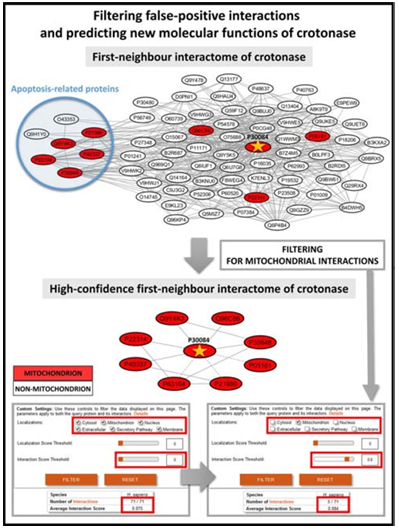
Here we present ComPPI, a cellular compartment-specific database of proteins and their interactions enabling an extensive, compartmentalized protein–protein interaction network analysis (URL: http://ComPPI.LinkGroup.hu). ComPPI enables the user to filter biologically unlikely interactions, where the two interacting proteins have no common subcellular localizations and to predict novel properties, such as compartment-specific biological functions. read more

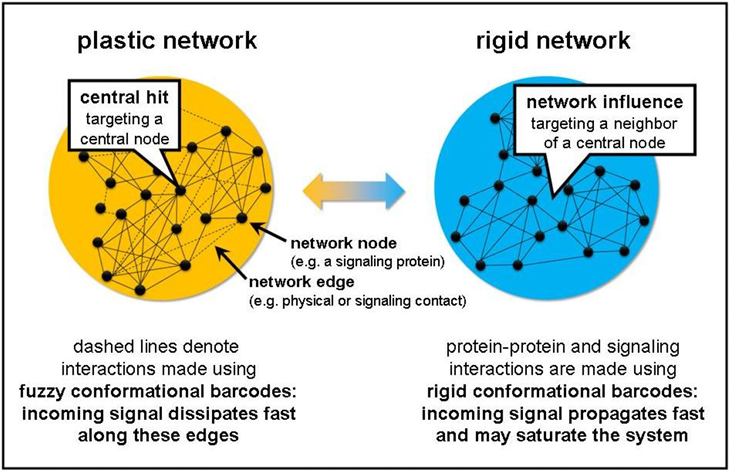
Attractor structures of signaling networks: Consequences of different conformational barcode dynamics and their relations to network-based drug design 
Preprint

Kristof Z. Szalay, Ruth Nussinov, Peter Csermely

Conformational barcodes tag functional sites of proteins, and are decoded by interacting molecules transmitting the incoming signal. Conformational barcodes are modified by all co-occurring allosteric events induced by post-translational modifications, pathogen, drug binding, etc. read more

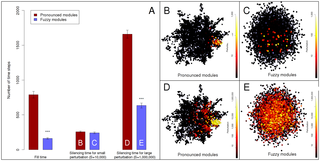
Perturbation Centrality and Turbine: A Novel Centrality Measure Obtained Using a Versatile Network Dynamics Tool 
Poster

Kristof Z. Szalay, Peter Csermely

Analysis of network dynamics became a focal point to understand and predict changes of complex systems. Here we introduce Turbine, a generic framework enabling fast simulation of any algorithmically definable dynamics on very large networks. Using a perturbation transmission model inspired by communicating vessels, we define a novel centrality measure: perturbation centrality. read more

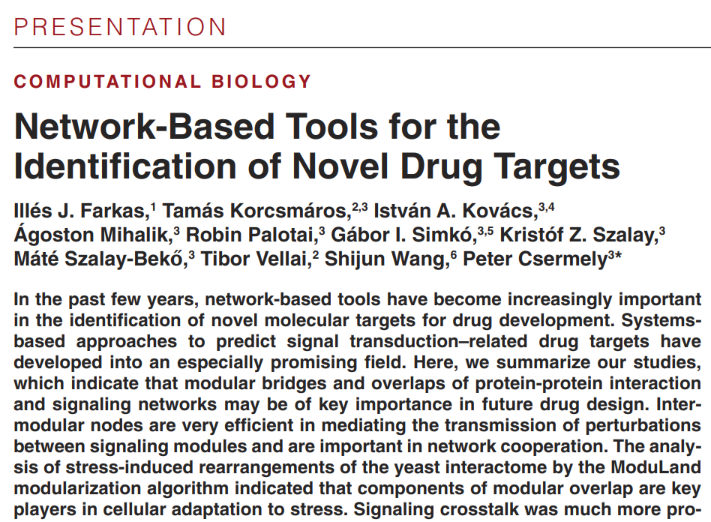
Network-Based Tools for the Identification of Novel Drug Targets 
Publication

Illés J. Farkas, Tamás Korcsmáros, István A. Kovács, Ágoston Mihalik, Robin Palotai, Gábor I. Simkó, Kristóf Z. Szalay, Máté Szalay-Beko, Tibor Vellai, Shijun Wang, Peter Csermely

In the past few years, network-based tools have become increasingly important in the identification of novel molecular targets for drug development. Systems-based approaches to predict signal transduction-related drug targets have developed into an especially promising field. Here, we summarize our studies, which indicate that modular bridges and overlaps of protein-protein interaction and… read more