Turbine and Daiichi Sankyo Expand ADC Discovery Collaboration
Read more

Publications

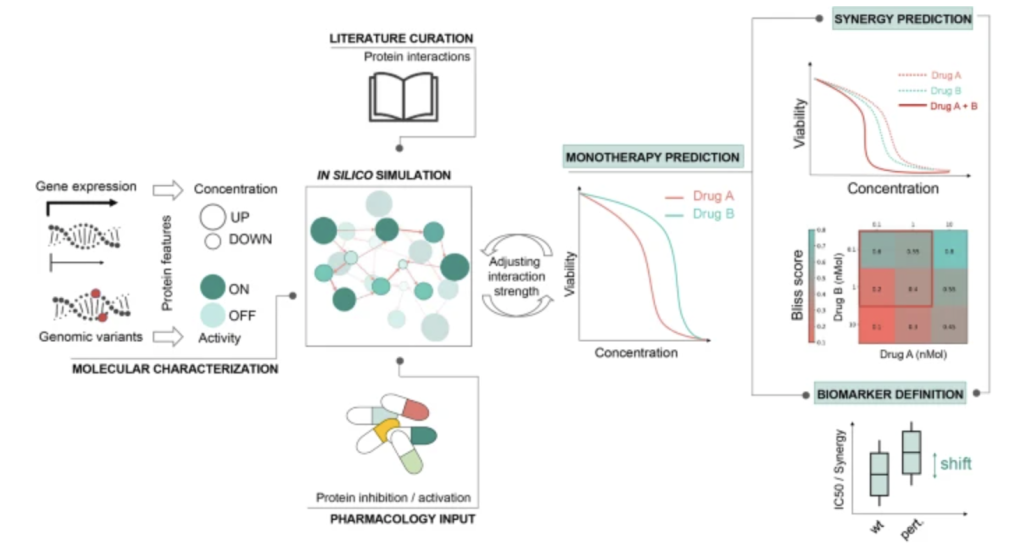
Identification and prospective validation of synergistic drug combinations using high throughput <i>in silico</i> simulations of cancer cell avatars 
Poster

Hasan Mamar, Orsolya Papp, Iván Fekete, Boldizsár Elek, Dániel V. Veres

Small-molecule drug combinations promise durable efficacy and improved patient survival across cancer indications while managing toxicity by decreasing the dosages of individual combination partners. However, finding synergistic combination partners while retaining a safe therapeutic window remains a major challenge limited by preclinical experimental capabilities not addressing the complexity of combining hundreds of… read more
New technologies to accelerate ADC design 
Webinar

Dániel Veres, Hassan Naseri, Eleni Tokali

ADCs represent a new era in targeted cancer therapy, with 15 approved drugs currently on the market. However, more than 100 discontinued programs and a similar number of active clinical trials also underscore the challenges in ADC design. Gaining a deeper understanding of the mechanisms and factors contributing to ADC efficacy and… read more

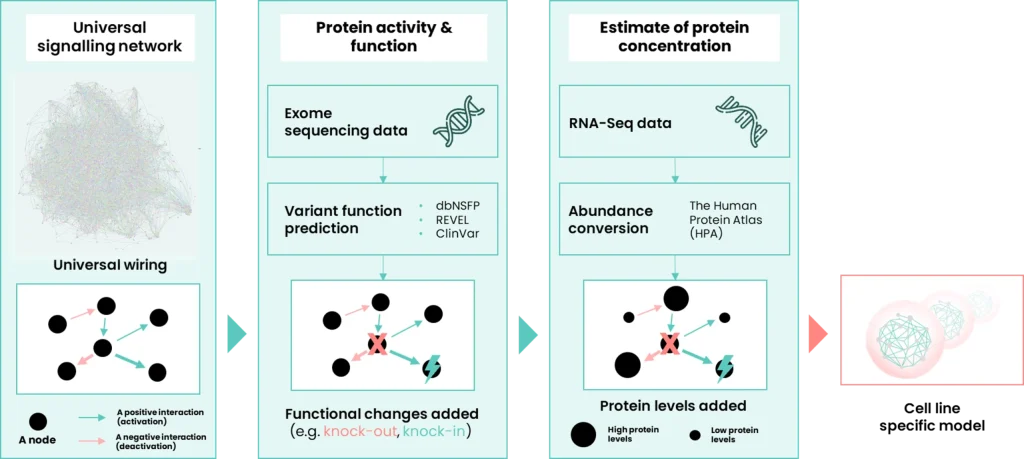
Modeling ADC payload biology using network based avatars 
Poster

István Taisz, Elek Boldizsár, Szilvia Barsi, Zsolt Gyure, Ágoston Mihalik, Dániel Veres, Ákos Tarcsay

ADCs represent a new era of targeted cancer therapy with 15 approved drugs. However, over 100 discontinued ADC programs and similar number of active clinical trials highlight the difficulties of identifying the optimal combination of antibody, target, payload, linker, drug-antibody-ratio and indication. read more

Network-driven cancer cell avatars for combination discovery and biomarker identification for DNA Damage Response inhibitors 
Publication

Orsolya Papp, Viktória Jordán, Szabolcs Hetey, Róbert Balázs, Árpád Bartha, Nóra N. Ordasi, Sebestyén Kamp, Bálint Farkas, Jay Mettetal, Jonathan R. Dry, Duncan Young, Ben Sidders, Krishna C. Bulusu, Daniel V. Veres

Combination therapy is well established as a key intervention strategy for cancer treatment, with the potential to overcome monotherapy resistance and deliver a more durable efficacy. However, given the scale of unexplored potential target space and the resulting combinatorial explosion, identifying efficacious drug combinations is a critical unmet need that is still… read more

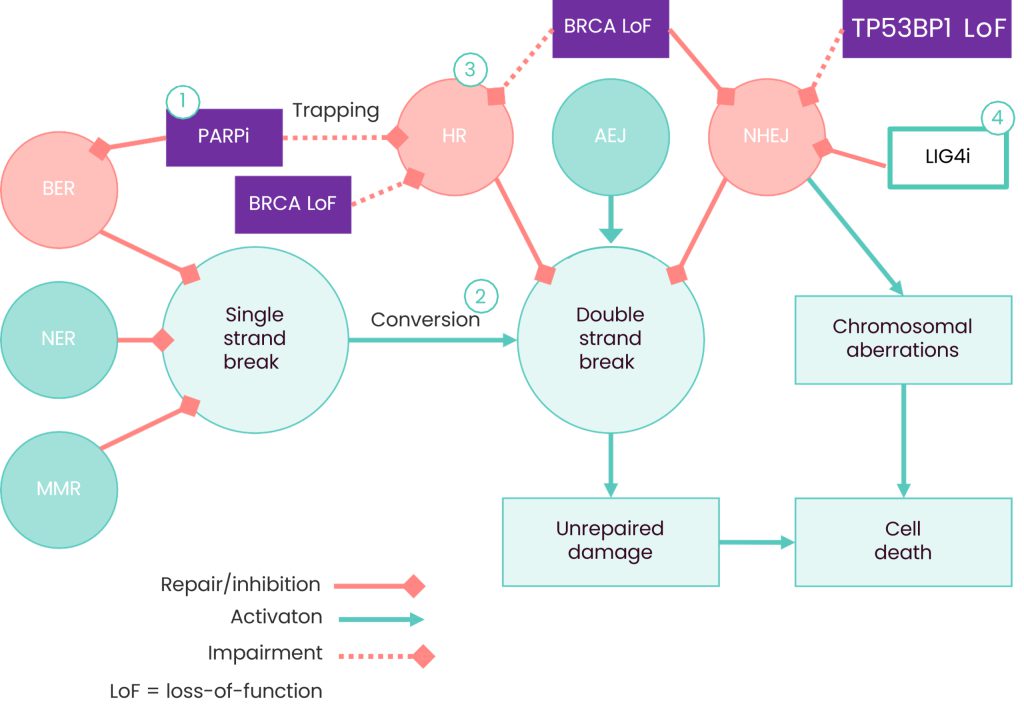
The Simulated Cell™ identifies LIG4 as a novel target in PARPi resistance via the modulation of NHEJ deficiency 
Poster

Csilla Laczka, Noémi Sándor, Iván Fekete, Dorottya Németh-Lukács, Orsolya Papp, Boldizsár Elek, Dániel Veres

Poly (ADP-ribose) polymerase (PARP) is a key enzyme in DNA repair and an approved target in various homologous recombination (HR)-deficient tumors, including breast, ovarian, pancreatic and lung cancer. However, after initial responsiveness, tumors often develop resistance toward PARP inhibitors (PARPi). One of the major mechanisms of PARPi resistance is the suppression of the non-homologous… read more

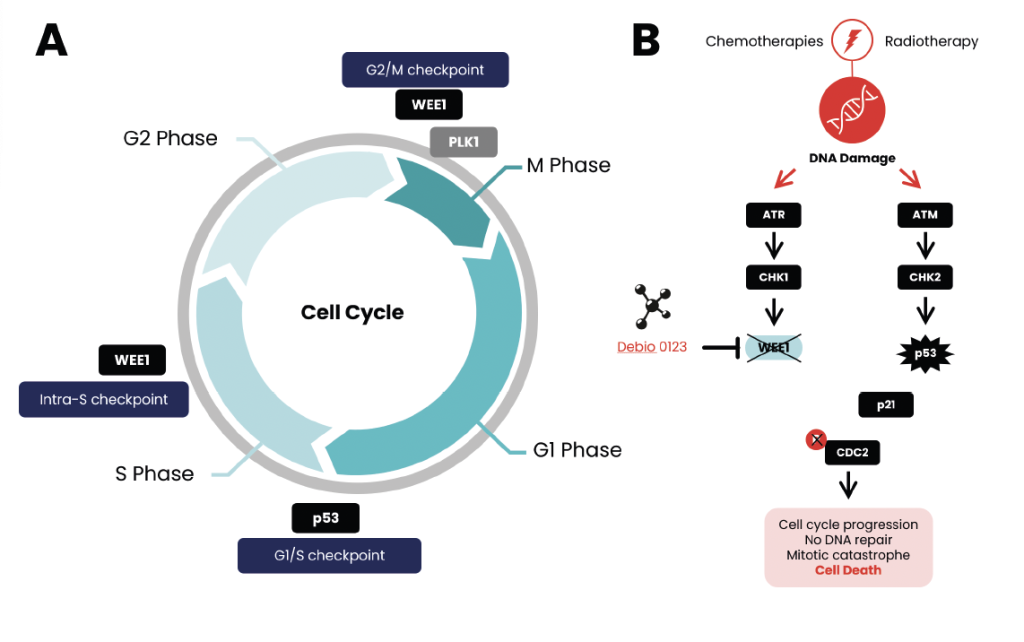
Simulation driven identification of combinations for the WEE1 inhibitor Debio 0123 results in synergistic effect with cabozantinib validated <em>in vivo</em> 
Poster

Boldizsár Elek, Anne Vaslin Chessex, Luke Piggott, Orsolya Papp, Iván Fekete and Dániel Veres

Debio 0123 is a novel, orally-available, selective ATP-competitive WEE1 inhibitor with potential as a best-in-class, brain-penetrant treatment being evaluated in Phase I trials for solid tumors. WEE1, a tyrosine kinase activated by DNA damage, acts at the S-phase and G2/M checkpoints to facilitate DNA repair before mitosis. read more